

The diagnostics operations layer for Contactless Medicine.
MedReach connects home phlebotomy, specimen collection, laboratory coordination, chain-of-custody visibility and result routing into one governed diagnostics pathway for patients, clinicians, laboratories, medical aids and care programmes.
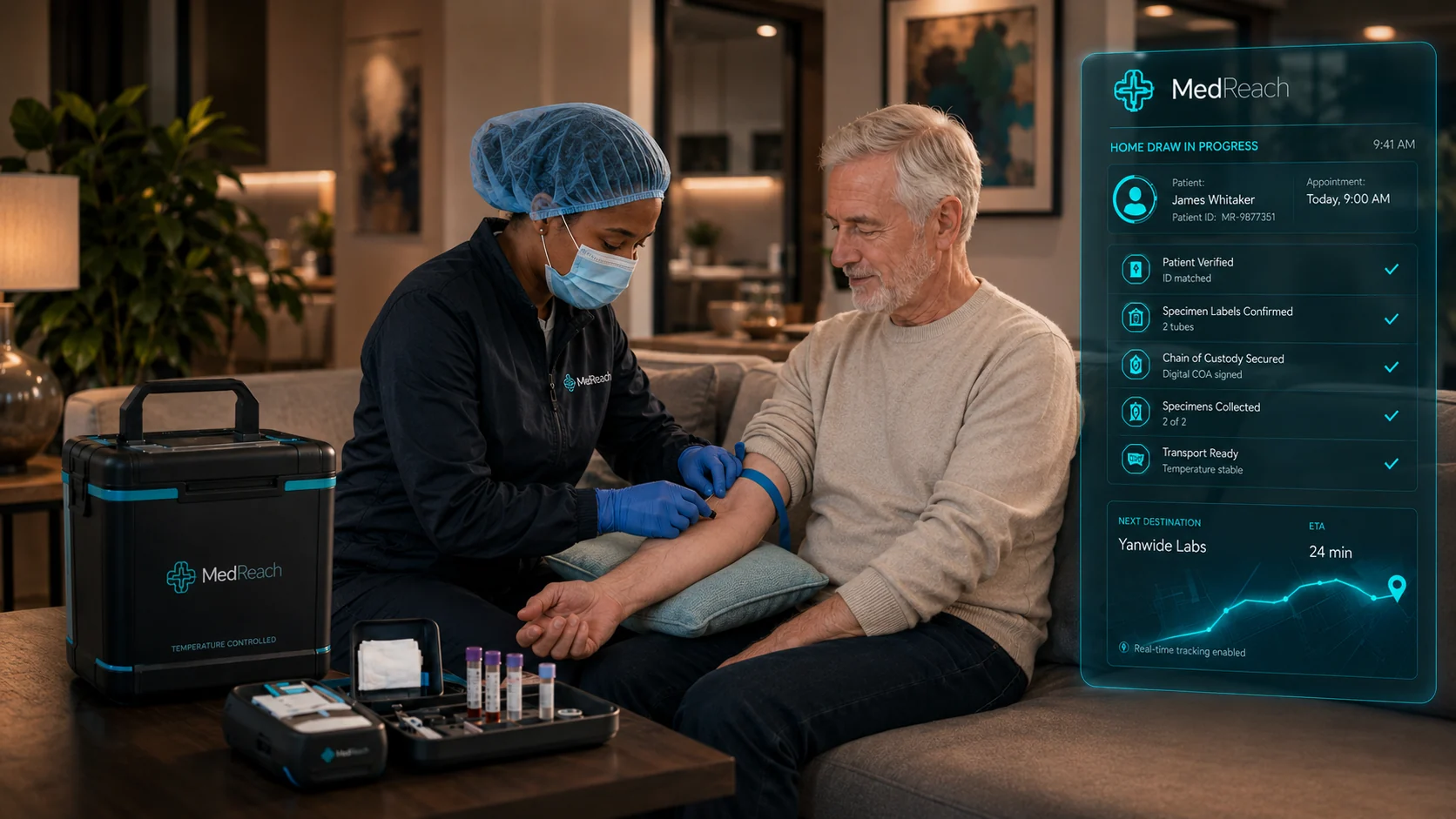
Bring diagnostics closer to the patient while preserving laboratory handover, custody, result routing and clinical governance.
From request to result routing.
MedReach is designed to make home diagnostics operationally visible, auditable and connected to the wider Ambulant+ care journey.
Diagnostic request
A clinician, programme or approved workflow initiates a diagnostic request within the Ambulant+ ecosystem.
Patient and order verification
Patient identity, consent, location, test requirements and operational readiness are checked before collection.
Phlebotomist assignment
An eligible phlebotomist receives the home-draw assignment with the relevant collection instructions.
Home collection
The phlebotomist performs the draw, labels specimens and records collection details according to workflow rules.
Specimen custody
Specimen packaging, chain-of-custody and transport readiness are tracked before laboratory handover.
Laboratory processing
Laboratory acceptance, processing status and result readiness are surfaced through the MedReach pathway.
Result routing
Results are routed into the appropriate clinician, patient or programme workflow where configured and permitted.
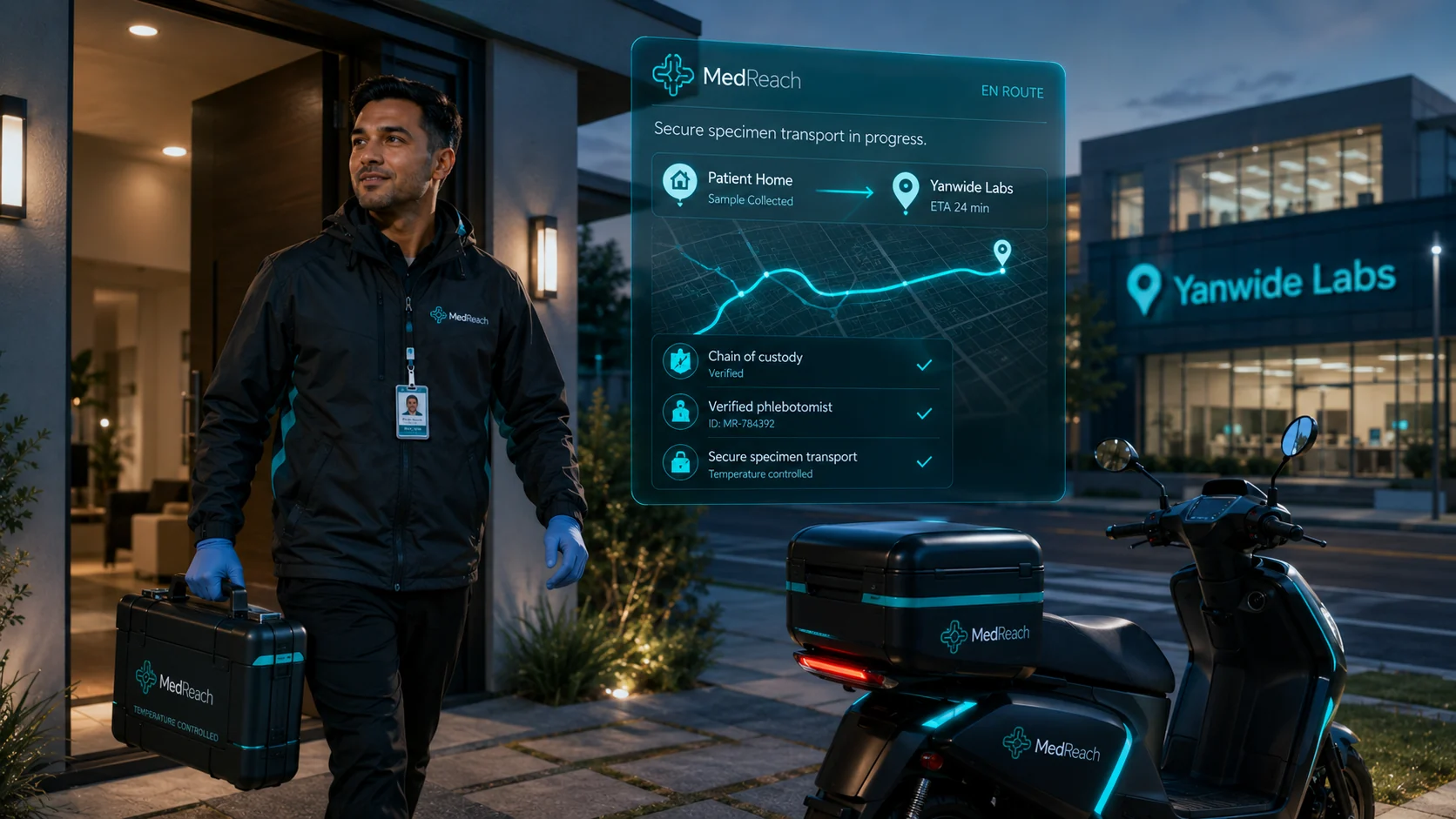
The sample journey is as important as the test request.
Diagnostics operations fail when collection, labelling, transport, handover and results are treated as separate fragments. MedReach gives the ecosystem one coordinated view of the diagnostic journey.
Structured collection assignment and patient verification.
Specimen labelling and collection documentation.
Transport-readiness and laboratory handover visibility.
Result-routing back into the care workflow.
Built for laboratories, phlebotomists and payer-funded diagnostic programmes.
MedReach keeps laboratory operations and phlebotomy workflows distinct while preserving one traceable diagnostic journey.
For laboratories
Configure laboratory onboarding, test catalogue, specimen-acceptance rules, processing status, result readiness and billing visibility.
For phlebotomists
Support verified home-draw assignments, patient confirmation, specimen labelling, custody, handover and earnings visibility.
For payers and programmes
Enable payer-funded diagnostics, coverage preflight, billable-event visibility, result-routing governance and programme reporting.
Diagnostics should be reachable without becoming uncontrolled.
MedReach is not just “someone takes blood at home.” It is the operations layer that helps make home diagnostics structured, reportable and connected to clinical and payer workflows.
Home phlebotomy assignment and route-ready workflow.
Patient identity, consent and collection-readiness checks.
Specimen labelling, packaging and chain-of-custody support.
Laboratory catalogue, panels, test availability and acceptance rules.
Status visibility for collection, transport, laboratory receipt and processing.
Result-readiness and result-routing into clinical and patient workflows.
Billable diagnostics events for payer, HMO, employer or sponsor programmes.
Operational auditability across phlebotomist, specimen, lab and result events.
Diagnostics access is a prevention lever.
For medical aids, employers and care programmes, delayed diagnostics often means delayed intervention. MedReach makes diagnostic access more practical while preserving governance.
Not a standalone laboratory
MedReach coordinates diagnostics operations. Laboratory testing remains subject to the participating laboratory, applicable rules, clinical indication and operational agreement.
Chain-of-custody matters
Diagnostics quality depends on identity checks, correct tubes, labelling, timing, transport, handover and documented specimen handling.
Results need clinical context
Diagnostic results should be interpreted by an appropriate clinician within the relevant care context, not treated as isolated automatic advice.
Enter the right Ambulant+ workspace.
Ambulant+ separates public information from protected workspaces, giving patients, clinicians, pharmacies, diagnostics teams, clients and administrators a role-appropriate route into the platform.